A Hiker Collapsed at the Bottom of the Grand Canyon, the Helicopter Was Grounded by Wind, and the Only Way Out Was Seven Miles Straight Up on the Back of a Mule Nobody Else Could Ride
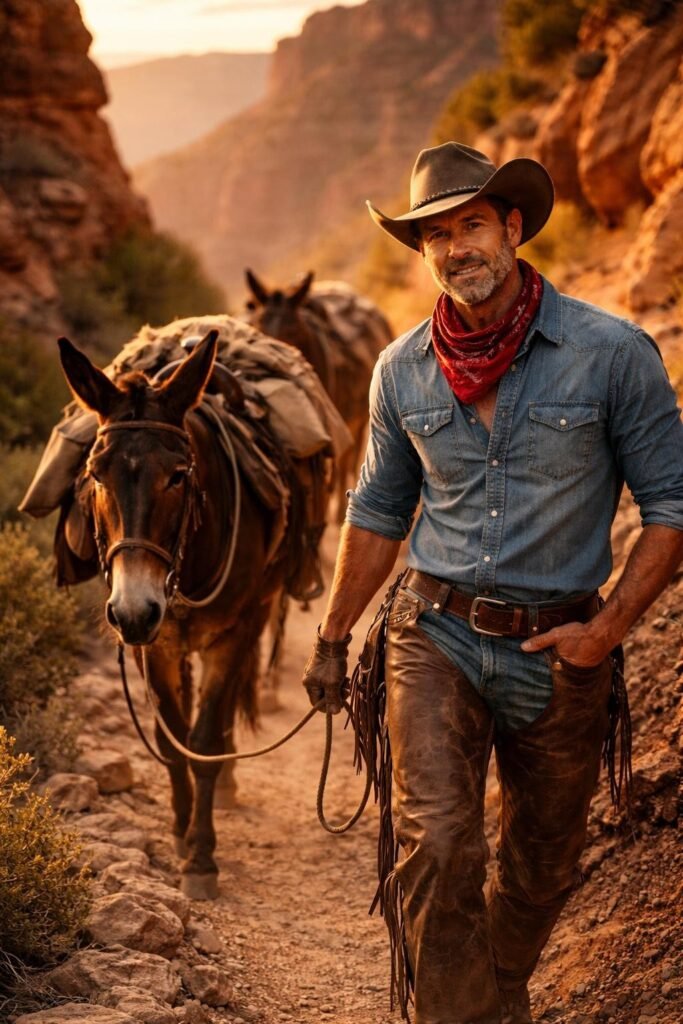
The hiker’s name was Gerald Ostrowski.
He was sixty-three, a retired mail carrier from Milwaukee, and he’d been saving for six years to hike to the bottom of the Grand Canyon with his late wife’s ashes in his backpack.
He was lying on a cot in the ranger station, gray as a sidewalk, with an oxygen mask on his face and his daughter, Ellen, holding his hand.
The ranger was also a paramedic. He took me aside.
“It’s his heart,” he said quietly. “Maybe a blockage. He needs a cath lab. Flagstaff, at least. Every hour matters.”
“How bad?”
“Bad enough that I’d rather try than wait.”
Here is what you need to understand about getting a man out of the bottom of the Grand Canyon.
You can’t drive. There’s no road.
You can’t carry him seven miles straight up on a stretcher at night without twenty strong people and ten hours. We had five people.
You can fly, if the wind lets you. It didn’t.
Or you can put him on a mule.
The park’s liability rules say no passengers on pack mules. Ever. The insurance company that covers the mule concession says the same thing in four places.
I called my boss on the satellite phone.
“If something goes wrong, they’ll sue the park, the concession and you personally,” he said. “You know that.”
“I know that.”
“Do it anyway,” he said. “I’ll deal with the lawyers.”
Gerald looked up at me when I came back in. He pulled the mask down.
“Are you the mule guy?” he whispered.
“Yes, sir.”
“My wife always wanted to ride a mule in the Grand Canyon,” he said. “Is this a good mule?”
I thought about the eleven names on the tack room door.
“She’s the best mule in Arizona,” I said. “She just has opinions.”